


Newsletter


By Appointment to His Majesty The King
Supplier and Manufacturer of Linens
Richard Haworth Ltd
Manchester

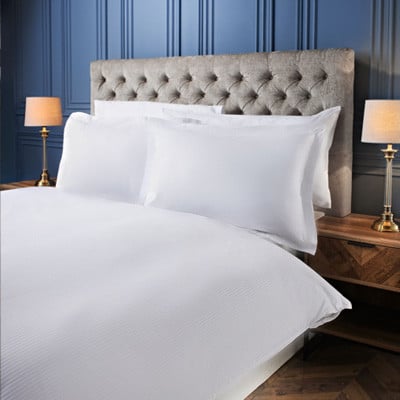 Why Choose Our Bed Linen
Crafted from responsibly sourced cotton, our bed linen offers the perfect balance of softness, breathability, and elegance. Designed for the rigours of hospitality use, it delivers lasting comfort, hotel-quality performance, and timeless style in every setting.
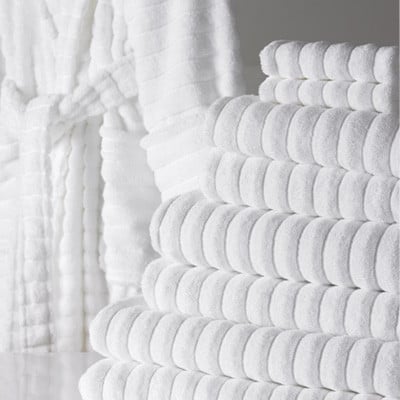
Crafted from premium cotton for exceptional softness and absorbency, our bath linen offers hotel-quality durability wash after wash. Responsibly made with a focus on comfort, style, and lasting performance.

Trusted by leading establishments across the UK, our table linen is renowned for its quality, durability, and refined appearance. Designed for the rigours of busy service, it maintains a crisp, elegant finish wash after wash — helping to make every dining occasion feel special.
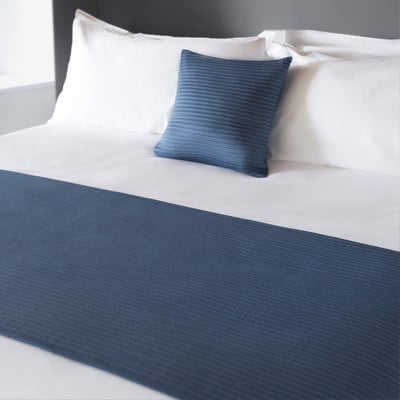
Add colour and comfort to any bedroom with soft furnishings that combine style, quality, and practicality. Many of our pieces are proudly made in the UK, designed to bring warmth and personality to every space.
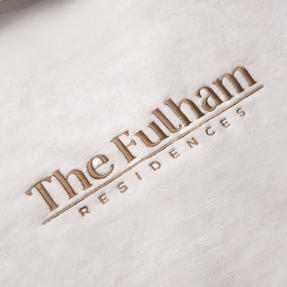
Add a personal touch with expertly finished embroidery, all produced in the UK. From logos to names, our embroidery service blends craftsmanship and care to create a distinctive, high-quality finish that sets your linens apart.
Two bath towels can look much the same in a listing and feel quite different when they arrive, and the number that usually explains the difference is the towel’s GSM. One listing says 500gsm, another 600gsm, a third 800gsm, and the guides meant to help put the same number in different bands, so it’s hard to tell whether the extra grams are worth paying for or how they’ll behave in your washing machine.
We make towels from 450gsm to 770gsm, each weight for a particular kind of property, from budget properties and caravan parks to ultra-luxury hotels. This guide explains what towel GSM measures, what a heavier towel changes at home and in a hotel laundry, and which weight we’d choose for a home bathroom, a holiday let or a hotel. It shows where each of our ranges sits and ends with a short selector that recommends a weight and tells you what you give up for it.
Rated 4.9 out of 5 for service by Feefo reviewers over the past year, with more than 6,600 verified reviews since 2013. Feefo Platinum Trusted Service Award. Read the reviews
Where do you want to start?
Just want to know what GSM means? Go to What does GSM mean on a towel? where the short answer comes first.
Choosing towels for your own bathroom? Go to Which GSM should I choose? and answer three questions.
Buying for a hotel, B&B or holiday let? Go to What GSM do hotels use? for weights by property standard and what each does to your laundry.
Weighing up a particular number, such as 500gsm? Go to What each towel weight feels like to see where it sits against ours.
In this guide
The short answer
GSM stands for grams per square metre, the weight of a towel’s cotton. The higher the number, the more cotton in every square metre, so the towel feels thicker and heavier and takes longer to dry. For home bathrooms we recommend 600gsm and above, because anything lighter feels thin in the hand.
GSM is measured on the fabric rather than on a finished towel, so it tells you how dense the cotton is, not how big or heavy a particular towel will be, and a hand towel and a bath sheet from the same range share one figure. In our ranges every size, from hand towel to bath sheet, is made at the range’s weight, and only a jumbo towel may differ. To work out what a towel weighs, multiply its GSM by its area: a 600gsm bath sheet at 100 x 150cm carries about 900g of cotton when it’s dry. Our bath sheet vs bath towel guide works out the same sum for every size we make.
The figure is measured before a towel is washed, and we make each range to within 5% of its stated weight. Washing changes it a little, because cotton shrinks, so a towel you’ve owned for a while won’t match its label exactly. The figure is where the choice starts rather than where it ends. It says nothing about the cotton itself, how the yarn was spun or how the loops were woven, and each of those changes how a towel of a given weight feels in the hand and how it behaves in the wash.
The first thing a heavier towel changes is how it feels in your hands, and that’s usually what people are remembering when they describe a hotel towel. More cotton in every square metre makes a deeper, denser towel that feels substantial when you wrap it round you, while a lighter towel of the same size feels flatter and thinner by comparison. The extra cotton also holds more water, so a heavier towel takes up more before it starts to feel damp. For a home bathroom we recommend 600gsm and above for this reason, because below that weight a towel tends to feel thin in the hand.
I followed the instructions to wash them before using them, and they came up so soft and fluffy. They absorb water efficiently and give you that hotel pampered feeling.
When towels disappoint, it’s often because they feel thinner than expected, and the weight usually explains it. Our 450gsm and 500gsm towels aren’t made for home bathrooms. We make them for budget properties, caravan parks and three-star hotels, where a towel is washed after every stay and quick drying and low laundry costs matter more than a deep pile. Bought for a home, they can feel light next to the towels you remember from a good hotel, so check the weight before you compare prices.
Weight also travels with the towel into the wash. Every extra gram is cotton that has to be wetted, spun and dried, so a heavier towel takes longer to dry through, and a bath sheet, with about 60% more fabric than a bath towel, adds to the difference. A tumble dryer narrows the gap. On an airer or a radiator, a 600gsm bath sheet dries best hung open across its full width, and our heaviest towels need longer again. Our towels don’t all take the same heat in the dryer either: Chelsea, Dunham and Madison can be tumble dried on a medium setting, while Brampton and Calgary should be dried on low, which adds time to a heavy load.
Size and weight work together, and it helps to keep both in mind if you’re replacing towels of every size at once. A 600gsm bath sheet carries about 60% more cotton than a 600gsm bath towel, so moving up in size adds weight in the same way as moving up in GSM, and doing both at once adds the most. What makes a towel feel like a hotel’s is usually the combination of the two, and our guide to bath sheet vs bath towel covers the size side of the choice. Choosing the weight first, then the size, keeps the two decisions separate.
In a hotel, the same weight shows up in every load and in the turnaround. Most hotels send their towels to an external commercial laundry, where a heavier towel adds weight to each load and takes longer to dry and finish before it comes back. So hotels match the weight of their towels to their standard rather than simply buying the heaviest they can find, as we explain in What GSM do hotels use?
Bath towels are usually sold somewhere between about 400gsm and 900gsm, and each step up changes the feel and the drying time a little. The table sets out what each weight is like and what we make it for, so you can see where a towel you’re considering sits against ours.
| Weight | How it feels | What we make it for | Our ranges |
|---|---|---|---|
| Under 450gsm | Light and thin | Lighter than any terry towel we make for a bathroom | None |
| 450gsm | Very lightweight and quick to dry | Budget properties and caravan parks | Dunham, Porto |
| 500gsm | Light, with more body than 450gsm; thinner than we’d recommend at home | Three-star properties | Chelsea, Luxus, Warwick |
| 550gsm | Between our three-star and four-star weights | We don’t make a 550gsm towel | None |
| 600gsm | Soft and substantial; where we start for home | Four-star and boutique hotels, and homes | Madison, Calgary, Brampton, Westbourne |
| 650 to 770gsm | Thick and plush, and slower to dry | Ultra-luxury hotels and homes | Mayfair (650gsm), Fitzroy (770gsm) |
| Over 770gsm | Heavier still, and much slower to wash and dry | Heavier than we make, because fewer fit in each wash and laundering costs too much for hotels | None |
At 450gsm, Porto is a step up from Dunham for budget properties. Warwick (500gsm) and Westbourne (600gsm) are made from zero twist yarn and come in colours as well as white, which suits smaller properties, since most hotels choose white. Brampton is a 600gsm towel with a chunky rib, for four-star and boutique hotels. You’ll find every range in our towels collection.
The step most people notice at home is from 500gsm to 600gsm, because that’s where a towel stops feeling thin in the hand. Below it, towels are built for quick drying and low laundry costs, which suits a busy hotel laundry better than a home bathroom. Above it, each extra 50 or 100 grams adds thickness, and drying time with it, so the heavier weights are a choice about how plush you want a towel to be rather than a fix for one that feels thin.
You’ll usually find the GSM in a towel’s specification rather than its name. Ours is listed as the weight in gsm on every product page, and each range uses the same figure across its sizes. If a listing doesn’t give a GSM, compare the weight of the towel against its size instead, because a towel described as luxurious with no weight given can be anywhere on the scale.
Towel GSM bands aren’t a standard, which is why the same towel can be called lightweight on one website and heavy on another. One guide puts 550 to 700gsm in its medium band and calls anything from 700gsm high, a high-street retailer describes 450 to 600gsm as lightweight, and press reviews of bath towels suggest at least 500gsm without saying what for. Each seller draws the lines around its own range, so the same band name can mean different weights from one shop to the next.
The number itself is consistent, because it’s a measurement, so compare numbers rather than labels. Better still, compare them with a towel you already own and like. If your favourite bath towel is about 600gsm, a listing at 500gsm will feel lighter and one at 700gsm heavier, whatever band either seller puts it in. The descriptions in our table say what we make each weight for, which is a more useful guide than a label because it tells you who the towel was designed around.
GSM is often sold as a score, so a 700gsm towel sounds better than a 500gsm one, but every gram that makes a towel feel thicker also has to be washed and dried. In a hotel that sends its towels to a commercial laundry, a heavier towel adds weight to every load and takes longer to dry, which is why we make our 450gsm and 500gsm ranges for budget properties and three-star hotels, where quick drying and low laundry costs matter more than a deep pile.
At home the cost is drying time and the energy that goes with it. A heavier bath sheet takes longer to dry through on an airer or a radiator, and the heaviest towel we make, our 770gsm Fitzroy, is also the most demanding one to dry at home. At the other end, our 450gsm Dunham needs the least drying time, so it suits anyone who wants to keep the cost of laundering as low as possible, although at home it feels thin in the hand next to the 600gsm we’d recommend.
Some people simply prefer a lighter towel, and one reviewer of our 500gsm Chelsea towels explained why.
A Chelsea towel is the best I've tried ..for anyone who doesn't like a fluffy towel. Does not get soaking wet when used..and dries quickly when washed.
For most homes, then, the better question is how heavy a towel your washing routine can comfortably dry, and we’d start that search at 600gsm. Towels heavier than ours are easy to find, and some are sold at 800 to 900gsm. We stop at 770gsm with Fitzroy, our most luxurious towel, which we make for ultra-luxury hotels and homes. Above that weight, fewer towels fit in each wash and every load takes much longer to launder, which makes the cost too high for hotels. At home the same extra cotton has to be washed and dried, so before paying for a higher number, think about where the towel will dry and how often you’ll wash it.
Weight doesn’t tell you how long a towel will last, either. In a hotel laundry, heavier and lighter towels last about as long as each other, and what changes with weight is how a towel feels and what it costs to launder. We’ll cover what does make a towel last in What Makes a Hotel Towel Durable, a guide we are preparing.
Weight is only one of the things you feel in a towel. Two towels at the same GSM can feel different because of the cotton they’re made from and how its yarn was spun, which is why we describe our ranges by construction as well as weight. Most of our ranges, from Dunham and Porto up to Madison and Brampton, are made from ring spun cotton. Mayfair and Fitzroy, our two heaviest, use combed cotton. Warwick and Westbourne are made from zero twist yarn, with Westbourne also combed, and Calgary is made from Microcotton. The surest way to tell which you prefer is to feel them, and you can request a swatch before you order.
Waffle towels are a different case, and their GSM can’t be compared with a terry towel’s, because they aren’t designed to dry you in the same way. Our Bliss range is a lightweight waffle towel made for spas and leisure clubs, where towels are washed and dried quickly between uses, so we don’t recommend it for home use.
Most people know roughly how they like a towel to feel, and the harder part is matching that to the way the towel will be used and dried. The scale shows what each weight is for and where our ranges sit, from our lightest at 450gsm to Fitzroy at 770gsm.
Under 450gsm
Lighter than any terry towel we make
450gsm
Budget properties and caravan parks
Dunham, Porto
500gsm
Three-star properties
Chelsea, Luxus, Warwick
600gsm
Four-star and boutique hotels; where we start for home
Madison, Calgary, Brampton, Westbourne
650 to 770gsm
Ultra-luxury hotels and homes
Mayfair, Fitzroy
Over 770gsm
Heavier than we make, and slow and costly to launder
The selector asks three questions: where the towels will be used, how you like a towel to feel and how they’ll be dried. It recommends a weight, highlights it on the scale and names the ranges we make at that weight, with what you give up for it. For a home bathroom it won’t suggest anything lighter than 600gsm, because that’s where we’d start.
Which GSM?
Where will the towels be used?
How do you like a towel to feel?
How are they dried?
Choose an answer for each question to see the weight we’d recommend.
The selector matches your answers to the weights we make for each kind of use, then adjusts for how your towels are dried. It’s a starting point: feel a swatch before you buy in quantity.
Hotels choose a towel weight to match their standard, because the weight a guest feels and the weight the laundry handles are the same cotton. Our lightest ranges, at 450gsm, are made for budget properties and caravan parks, where quick drying and low laundry costs matter most. We make 500gsm ranges for three-star hotels, 600gsm for four-star and boutique hotels, and 650gsm and 770gsm for ultra-luxury hotels that want to give guests the heaviest towels and aren’t concerned about the cost of the towels or their laundering. Most hotels also put bath sheets rather than bath towels in their bathrooms, which adds more cotton again, and our guide to bath sheet vs bath towel explains that choice.
Most hotels send their towels to an external commercial laundry, so the weight of a towel shows up in every load and in the time it takes to dry and finish before it comes back. Moving up a weight is a decision about the laundry as much as about comfort. Most laundries price towels by both the number and the weight, so a heavier towel raises the cost of every load. Before you change, ask your laundry how it charges and whether heavier items change its turnaround. If you launder on site, the limit is your drying capacity, since a heavier towel keeps each load in the dryer for longer.
Holiday lets, Airbnbs and B&Bs face the same trade-off, usually with a domestic machine and less drying space. A host washing towels between guests is limited by the drum and the drying, and on a same-day changeover a lighter towel that dries quickly can be the difference between towels folded before check-in and towels still on the airer. Some hosts choose bath towels rather than bath sheets for the same reason.
We’d choose a weight for a let in the same way as for a hotel, with 450gsm at the budget end, 500gsm to 600gsm in the middle and 650gsm and above for a more luxurious let. If you want guests to find the weight they’d expect at home, 600gsm is where we’d start, while a lighter towel is a practical choice where you launder at home and turn rooms round quickly. Our Warwick and Westbourne towels come in colours as well as white, which suits smaller properties.
What buyers say
bought for use in a new B&B venture- been washed twice and seem to still be fluffy, without costing the earth.
My job is to inspect holiday accommodation so I see a good selection of towels after heavy use. The Richard Haworth towels are the ones that seem to stay soft and fluffy…
Spa and pool areas are a separate case. Towels there are made to be washed and dried quickly between uses, so we make our lightweight Bliss waffle towels for them rather than using the weight in your guest bathrooms. We’ll cover spa and treatment-room linen in Spa and Wellness Linen for Treatment Facilities, a guide we are preparing.
Before you order for a whole property, feel the weights for yourself. You can request a swatch, or call our trade team on 0845 337 7732 (call charges may apply). How many sets to hold, and when to replace them, depend on your changeover pattern and laundry turnaround, and we’ll cover both in How Often Should Hotels Replace Their Towels?, a guide we are preparing.
For a home bathroom we recommend 600gsm and above, and the first three cards meet that mark. The fourth is a lighter range we make for three-star properties, included so you can see plainly what a lighter towel gives up.
Where we’d start for home
A 600gsm ring spun cotton towel with a honeycomb header, in white and five colours. It’s the weight we recommend as a starting point at home, and it suits four-star and boutique hotels. It takes longer to dry than our lighter ranges, so give a bath sheet room on the airer.
Home use and boutique hotels
A 600gsm Microcotton towel for home bathrooms and for four-star and boutique hotels. It should be tumble dried on a low heat, so allow longer to dry a bath sheet at home.
For a plusher towel
Our 650gsm combed cotton towel, made in Turkey from Turkish yarns, with a narrow ribbed header. We make it for ultra-luxury hotels, and at home it’s a step up in thickness from 600gsm. It’s heavier in the wash than our 600gsm towels and slower to dry on an airer.
For three-star properties
A 500gsm towel with a diagonal chevron header and woven bars that tell the sizes apart, made for three-star properties. It dries faster than our 600gsm ranges, but it’s lighter than we’d recommend for a home bathroom.
Every range we make is set out below, from our lightest to our heaviest, with who we make it for. Each range is made at one weight across its hand towel, bath towel and bath sheet, so a set feels the same in every size.
| Range | Weight | Cotton and finish | Who we make it for |
|---|---|---|---|
| Dunham | 450gsm | 100% ring spun cotton; plain weave header with size bars | Budget properties and caravan parks; the quickest to dry |
| Porto | 450gsm | 100% ring spun cotton; grey header bar | Budget properties; a step up from Dunham |
| Chelsea | 500gsm | 100% ring spun cotton; chevron header with size bars | Three-star properties |
| Luxus | 500gsm | 100% ring spun cotton; pencil header | Three-star properties |
| Warwick | 500gsm | Zero twist yarn; white and colours | Three-star properties; smaller properties wanting colour |
| Madison | 600gsm | 100% ring spun cotton; honeycomb header | Four-star and boutique hotels; our starting point for home |
| Calgary | 600gsm | 100% Microcotton | Four-star and boutique hotels; home bathrooms |
| Brampton | 600gsm | 100% ring spun cotton; chunky rib | Four-star and boutique hotels |
| Westbourne | 600gsm | Zero twist, combed cotton; white and colours | Four-star and boutique hotels; smaller properties wanting colour |
| Mayfair | 650gsm | 100% combed cotton, Turkish yarns; ribbed header | Ultra-luxury hotels and homes |
| Fitzroy | 770gsm | 100% combed cotton, Turkish yarns; braided header | Ultra-luxury hotels and homes |
| Bliss Waffle Spa | 450gsm | 100% cotton waffle | Spas and leisure clubs; not for home use |
You can see every range in our towels collection.
A 500gsm towel is a good lightweight towel. It dries faster than a heavier one and costs less to launder, which is why we make our 500gsm ranges for three-star properties. For a home bathroom it can feel thin, so we recommend 600gsm and above if you want the feel of a hotel towel.
600gsm is the weight we recommend as a starting point for a home bathroom, and the weight we make for four-star and boutique hotels. It feels soft and substantial without being as slow to dry as our heaviest towels.
Our heaviest towel is Fitzroy, at 770gsm, which we make for ultra-luxury hotels and homes. Other brands sell towels at 800 to 900gsm. Above 770gsm fewer towels fit in each wash and every load takes much longer to launder, which is why we stop there, and at home the highest number only makes sense if your washing and drying can keep up with it.
Yes. A heavier towel has more cotton in every square metre, so it holds more water before it feels damp. New towels absorb better once they’ve been washed, so wash yours before you first use them.
Multiply its GSM by its area in square metres. A 600gsm bath towel at 70 x 135cm weighs roughly 570g dry, and a bath sheet in the same cotton at 100 x 150cm about 900g. Our bath sheet vs bath towel guide works out the weight of every size at each of our weights.
In our ranges they do. Each range is made at one weight across its hand towel, bath towel and bath sheet, and face cloths are typically made at the same weight, so a matching set feels the same. Only a jumbo towel may differ. A hand towel is much smaller, so it weighs far less even at the same GSM.
It depends on the hotel. We make 450gsm towels for budget properties and caravan parks, 500gsm for three-star hotels, 600gsm for four-star and boutique hotels and 650 to 770gsm for ultra-luxury hotels. Most hotels choose the weight to suit their standard and their laundry rather than buying the heaviest towel available.
Choose the weight first, then the size. For a home bathroom, 600gsm is where we’d begin, moving up to 650 or 770gsm if you want a thicker towel and have the room to dry it. For a hotel, B&B or let, match the weight to your standard and to how your towels are laundered. You can compare every range in our towels collection, or request a swatch to feel the weights side by side.